nfl trades
Introduction
NFL trades are some of the most exciting moments in football. When teams swap players, the whole league pays attention. Fans hold their breath wondering if their favorite player will move to a new city. The trade market in the NFL moves fast and changes everything. One phone call can turn a struggling team into a contender. One deal can bring hope to a fan base that has waited years for success. Understanding how NFL trades work makes you a smarter fan. You will know why teams make certain moves. You will understand the value of draft picks and players. The best part is that trades happen all year round. During the offseason, teams rebuild. During the season, they push for championships. Every single trade tells a story. Some stories end with parades and trophies.
Others end with regret and questions about what went wrong. Let me walk you through the complete world of NFL trades so you never miss a beat when your team makes a move .
How NFL Trades Actually Work
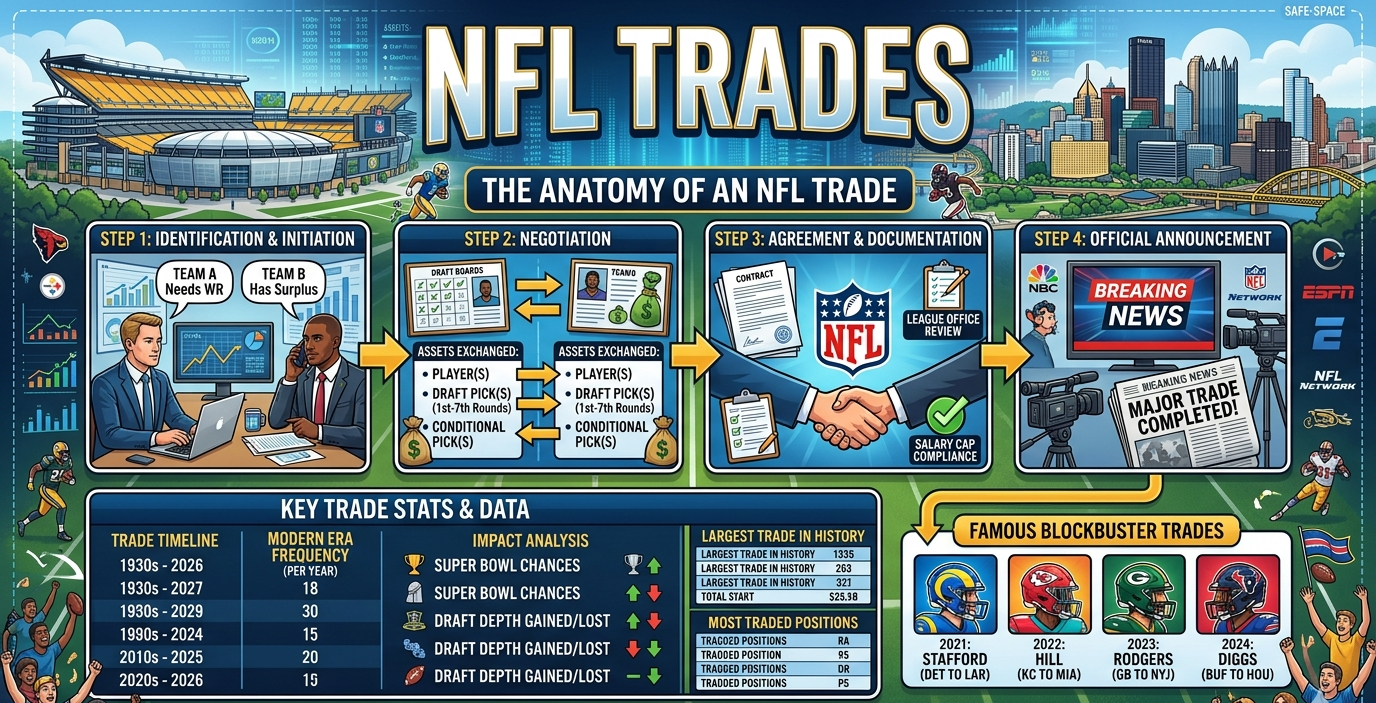
The rules for NFL trades are simpler than many fans realize. Two teams agree to exchange players, draft picks, or both. The league must approve every trade to make sure it follows the rules. Money matters a lot in these deals. Players have contracts with salaries and bonuses. When a player moves to a new team, their contract goes with them. The new team takes over paying the remaining money. Sometimes teams trade players to save money. If a player costs too much, the team might send them away. Other times teams trade for players to add talent even if it costs more money. The salary cap plays a huge role in every decision. Teams cannot spend unlimited money. They have a budget each year.
NFL trades must fit within that budget for both teams. This is why you see teams restructuring contracts or including picks instead of players. The money has to work for everyone involved. If the numbers do not add up, the trade cannot happen no matter how much both teams want it .
The NFL Trade Deadline Explained
Every season has a day when trading stops. This is the NFL trade deadline. It usually falls around the middle of the season, sometime in late October or early November. After this date, teams cannot make trades until the offseason starts again. The deadline creates huge excitement across the league. Teams that think they can win make calls to add final pieces. Teams that are struggling decide whether to sell their best players for future picks. The hours before the deadline are chaos. Reporters rush to break news. Fans refresh their phones constantly. Deals that seemed impossible suddenly come together in minutes. Some years are quiet with few moves. Other years see blockbuster deals that change the whole league.
The deadline forces teams to make tough choices. Do you believe in your current group enough to add talent? Do you admit this season is lost and plan for next year? There is no right answer, only the choices teams make based on what they see .
Why Teams Make Trades
Teams have many different reasons for making NFL trades. The most common reason is to get better right now. A team that believes they can win the Super Bowl might trade future picks for a star player. They decide that today matters more than tomorrow. This is called “win now mode” and it happens every year with contenders. Other teams trade away their best players to rebuild. These teams know they cannot win soon. They collect draft picks and young players to build for the future. It hurts fans to see favorites leave, but sometimes it is necessary. Salary cap problems cause many trades too. When a team pays too many players, they run out of money. Trading a expensive player frees up space to sign others.
Sometimes players request trades themselves. They might be unhappy with their role. They might want to play for a winner. They might have problems with coaches. When a star wants out, teams usually try to trade them rather than keep someone unhappy .
The Biggest Trades in NFL History
Some NFL trades become legendary. The Herschel Walker trade in 1989 might be the most famous ever. The Dallas Cowboys sent Walker to the Minnesota Vikings for multiple players and picks. Those picks turned into stars that built a Cowboys dynasty. They won three Super Bowls because of that one trade. The Vikings, sadly, did not get the same result. More recently, the trade for Deshaun Watson shook the league. The Cleveland Browns gave up three first round picks to get him. That is an enormous price for one player. Time will tell if it works out. The Rams have made huge trades too. They sent multiple picks to get Matthew Stafford from Detroit. The very next year, they won the Super Bowl. That trade worked perfectly for them.
The Broncos traded a huge package for Russell Wilson hoping for similar results. It did not work out the same way. These huge trades show how much risk is involved. When you give up many picks, you bet everything on one player .
How Draft Picks Affect Trades
Draft picks are like money in the NFL. Teams use them to buy players from other teams. A first round pick is extremely valuable. Teams do not give them away easily. When you see a trade involving first round picks, you know something big is happening. Later round picks matter too. Teams collect extra picks to have more chances at finding talent. The value of picks changes depending on where they fall. A very high first round pick is worth way more than a late first round pick. Teams know this and negotiate hard based on position. Sometimes teams trade a player for a conditional pick. That means the pick gets better if the player performs well or if his new team wins.
This protects both sides. If the player does great, his old team gets rewarded. If he struggles, the new team does not lose as much. Understanding pick values helps you judge whether your team won or lost a trade. You cannot just count how many players changed sides .
Trade Rumors and Why They Spread
Every fan loves trade rumors. During the season, reporters share what they hear about possible NFL trades. Some rumors turn out to be true. Others are completely wrong. Teams often leak information on purpose. They might want to see if other teams are interested. They might want to pressure a player to accept less money. They might want to make fans excited. You have to be careful about believing everything you read. The best reporters have sources inside teams. They build trust over many years. When they say a trade might happen, people pay attention. But even the best reporters get things wrong sometimes. Plans change fast in the NFL. A deal that seemed done can fall apart over one phone call.
The fun part of rumors is discussing with other fans. Should your team trade for that player? What would you give up? These conversations are part of what makes being a fan so enjoyable. Just remember that most rumors never become reality .
Salary Cap and Contract Issues
Money matters more than anything in NFL trades. Every player has a contract with specific numbers. When a team trades for a player, they take over that contract. They must fit the money under their salary cap. This can be tricky. Some contracts have guaranteed money that the old team must still pay. Some have bonuses that count against the cap no matter what. General managers must understand all these rules perfectly. One mistake can ruin a team’s finances for years. The salary cap goes up and down each year based on league revenue. Teams have to plan ahead. When they make a trade, they think about this year and future years. Taking on a huge contract might mean losing your own players later.
Sometimes teams trade for a player knowing they will only keep him for one year. They just need a short term boost. Other times they plan for the player to be a long term star. The contract tells you which situation is happening .
Trade Deadline Strategies for Contenders
Teams that believe they can win the Super Bowl act differently at the deadline. They look for missing pieces that can put them over the top. Sometimes they need a pass rusher who can get to the quarterback. Sometimes they need a cornerback to stop the other team’s best receiver. Sometimes they need running back depth because injuries hit hard. Contenders are willing to overpay a little because the reward is so big. Winning a championship is worth giving up future picks. Look at the Rams trading for Von Miller a few years ago. They gave up picks but got a Super Bowl ring. That trade worked perfectly.
Other contenders trade for players who do not help enough. They waste picks and still lose in the playoffs. The difference is hard to predict. Teams must be honest about their chances. If you are not truly one player away, trading future assets makes no sense. The best contenders know exactly what they need and go get it .
Rebuilding Teams and Selling Players
Bad teams face different choices at the trade deadline. They must decide whether to keep their veterans or trade them for picks. This is called selling. When you sell players, you admit this season is not your year. You start planning for the future instead. Smart rebuilding teams trade players before they lose value. A star player on a bad team might want to leave anyway. Trading him brings back picks that become future stars. The Chicago Bears traded Khalil Mack a few years ago. It hurt fans to see him go. But those picks helped build a younger team. Sometimes rebuilding teams take on bad contracts from other teams.
In exchange, they get extra draft picks. They accept losing now to win later. This strategy takes patience. Fans hate watching their team lose. But if the plan works, the winning feels even sweeter. The key is having a general manager who knows what he is doing. Bad rebuilds just leave teams bad forever. Good rebuilds create long term success .
How Trades Affect Players and Families
Behind every trade is a human being with a family. When NFL trades happen, players must pick up their whole lives and move. This is harder than fans realize. A player might have kids in school. His wife might have a job. They might own a home in the city. Suddenly, they have weeks to move across the country. Some players love being traded. They get a fresh start and new opportunities. Others hate it. They built friendships and community where they were. The business side of football does not care about feelings. Teams make decisions based on winning, not on making players comfortable. Good organizations help players transition. They offer support with housing and schools.
They understand that happy players play better. But in the end, trades are business decisions. Players know this when they sign up. They make millions of dollars in exchange for uncertainty. Still, it is worth remembering that real people are involved every time your team makes a deal .
Notable NFL Trades in Recent Years
The last few years have seen some amazing NFL trades that changed the league. The Los Angeles Rams made the biggest splash by trading for Matthew Stafford. They sent Jared Goff and two first round picks to Detroit. Stafford threw the winning pass in the Super Bowl that same year. It was a perfect trade for them. The Denver Broncos tried to copy this success. They traded multiple picks and players for Russell Wilson. It did not work at all. Wilson struggled and the team missed the playoffs. Two years later, they traded him away. The Cleveland Browns made the most controversial trade for Deshaun Watson.
They gave up three first round picks and signed him to a huge contract. The results have been mixed so far. The Arizona Cardinals traded for wide receiver Hollywood Brown. They sent a first round pick to Baltimore. Brown helped for a while but eventually moved on. These trades show how risky big moves can be .
Complete NFL Trade Stats Table
Here is a detailed breakdown of important NFL trades and what they meant for the teams involved.
| Trade | Teams Involved | Key Players/Picks | Year | Result |
|---|---|---|---|---|
| Herschel Walker | Cowboys to Vikings | Multiple players and picks | 1989 | Cowboys won 3 Super Bowls |
| Matthew Stafford | Lions to Rams | Goff plus two first round picks | 2021 | Rams won Super Bowl LVI |
| Russell Wilson | Seahawks to Broncos | Multiple picks and players | 2022 | Broncos missed playoffs |
| Deshaun Watson | Texans to Browns | Three first round picks | 2022 | Mixed results so far |
| Khalil Mack | Bears to Chargers | Two second round picks | 2022 | Chargers made playoffs |
| Tyreek Hill | Chiefs to Dolphins | Five draft picks | 2022 | Both teams successful |
| Davante Adams | Packers to Raiders | First and second round picks | 2022 | Raiders struggled |
| AJ Brown | Titans to Eagles | First round pick | 2022 | Eagles went to Super Bowl |
| Carson Wentz | Eagles to Colts | Conditional picks | 2021 | Colts missed playoffs |
| Jared Goff | Rams to Lions | Part of Stafford trade | 2021 | Lions rebuilt successfully |
This table shows how unpredictable trades can be. Some work beautifully while others fail completely. The teams that evaluate talent best usually win these deals .
Frequently Asked Questions
When is the NFL trade deadline?
The trade deadline usually falls in late October or early November. It happens during week 8 or 9 of the regular season. The exact date changes slightly each year but always comes around the middle of the season.
Can NFL teams trade draft picks?
Yes, teams can trade future draft picks. They often trade picks from the next year or even two years away. This is how teams get extra assets to complete bigger deals for star players.
Do players have to accept trades?
Players cannot block trades unless they have a no-trade clause in their contract. These clauses are rare and usually only for the biggest stars. Most players must go where they are traded.
What is a conditional draft pick?
A conditional pick changes based on certain conditions. For example, a player might need to play a certain number of games or make the Pro Bowl. The better he performs, the higher the pick his old team gets.
How do trades affect the salary cap?
The salary cap impact depends on the player’s contract. Signing bonuses stay with the old team usually. Base salary moves to the new team. Both teams must fit the numbers under their cap.
Why do some trades get canceled?
Trades can fail for many reasons. A player might not pass a physical exam. The teams might disagree on contract terms. Sometimes the league office rejects trades that break rules. Most issues happen before deals become official .
Conclusion
NFL trades make football more exciting all year long. Whether you love the drama of deadline day or the big offseason moves, there is always something happening. Teams take huge risks when they swap players and picks. Some risks pay off with championships. Others lead to years of struggling. The key is understanding why teams do what they do. Every trade tells a story about how a team sees itself. Are they ready to win now? Are they building for tomorrow? The answers shape every decision they make. Next time your team makes a trade, you will understand the strategy behind it. You will know whether they gave up too much or got a steal.
You will appreciate the human side of players moving their families across the country. Football is better when we understand the game beneath the game. Keep watching, keep learning, and enjoy the ride when your team makes their next big move. The trades keep coming, and the excitement never stops .
| Read More Informative Blogs Like This. Tap Here 👉 Amazing Memphis Grizzlies vs OKC Thunder Match Player |
About the Author