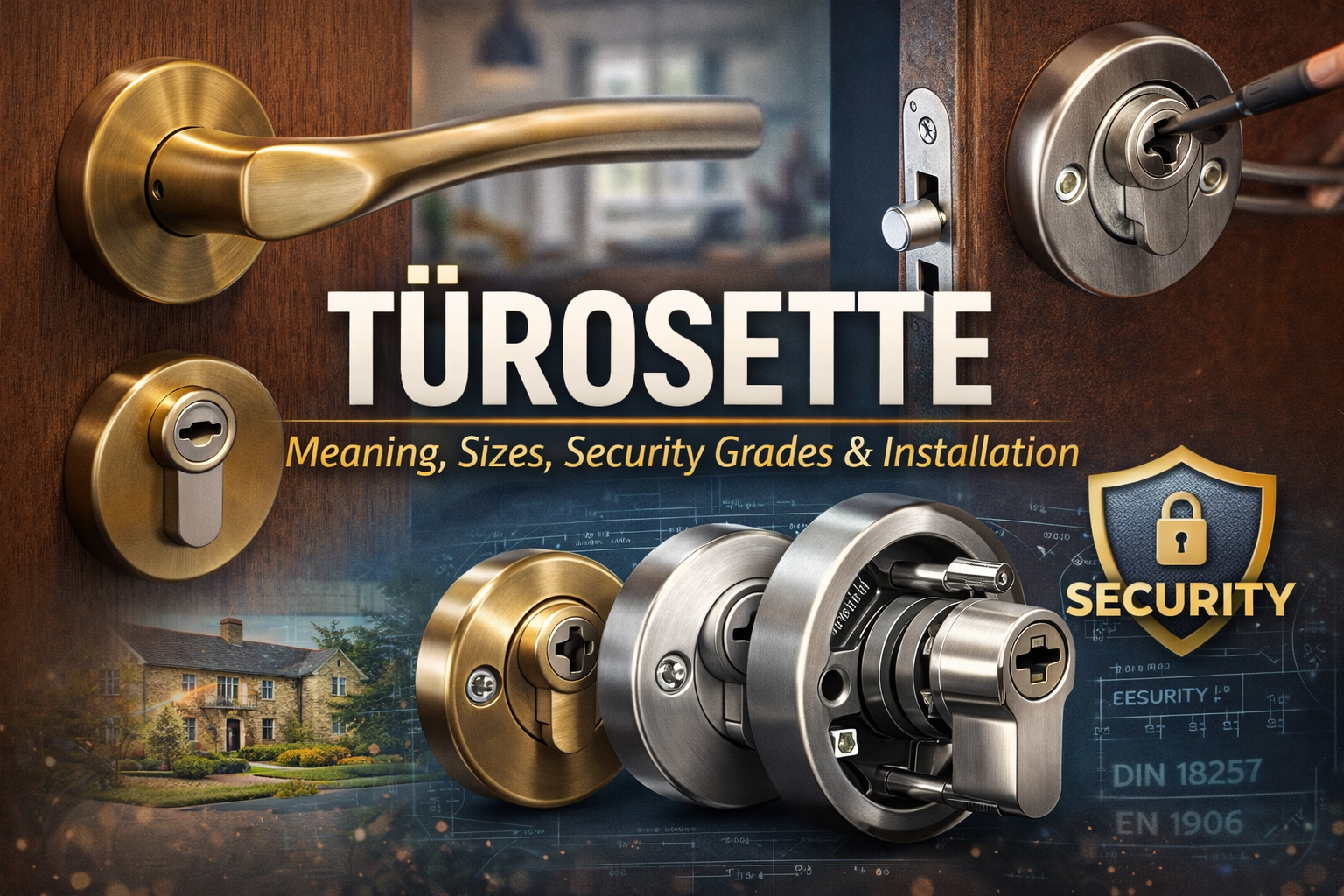
Türosette
Türosette: The Small Door Part That Makes a Big Difference
Expert Guidance on Door Rosettes, Aesthetics, and Security Standards
A Türosette is the plate that sits around a door handle or keyhole. Some people call it a door rosette, rose, or an escutcheon plate. It covers rough cutouts, protects the door surface, and gives the handle area a clean finish. On entry doors, a stronger version can also add real break-in resistance by shielding the lock cylinder from attacks. That is why this tiny part shows up in security guides and insurance discussions in parts of Europe.
It can also improve the look of the door in minutes, without a full replacement. That mix of style and protection is the reason people search this topic again and again.
Quick Profile: What a Türosette Covers
| Feature | What it means | Why it matters |
|---|---|---|
| Main purpose | Covers hole behind handle/keyhole | Cleaner look, less wear |
| Common U.S. term | Escutcheon / rosette / rose | Helps readers understand fast |
| Common shapes | Round, oval, square, long plate | Must match door style |
| Security versions | “Sicherheitsrosette” | Protects lock cylinder |
| Typical materials | Stainless steel, aluminum, brass | Strength and rust resistance |
What “Türosette” Means in Plain English
The word is German-leaning, and in many places it points to door hardware. In plain English, think of it as a “finish plate” for the handle and lock area. If the door has a keyhole, the rosette frames that opening. If the door has a handle, the rosette sits behind the lever or knob. It hides the drilling marks and keeps the surface from getting chewed up over time.
In the U.S., you will often see “escutcheon plate” used for keyholes. You will also see “rosette” or “rose” used for the round plate behind a handle. These words point to the same idea. A neat, durable cover that keeps the door looking sharp.
Why a Türosette Matters on Real Doors
A Türosette solves three everyday problems. First, it protects the finish. Keys slip. Rings scrape. Handles rub. The plate takes the damage, not the door. Second, it improves the fit. A good rosette reduces wobble and helps the handle feel solid. Third, it upgrades the look. Doors often look “unfinished” without a clean plate behind the hardware.
On entry doors, there is a fourth benefit. A security-style Türosette can protect the lock cylinder from pulling, drilling, and prying attempts. Some models use inside mounting so there are no exterior screws to attack. That is a huge deal for front doors facing streets, hallways, or shared buildings.
Types of Türosette: Decorative vs Security
Not every Türosette is built for security. Many are decorative. They exist to cover holes and match the handle finish. These are perfect for interior doors, closets, and light-use spaces.
Security rosettes are different. They are built to protect the lock cylinder and the area around it. In German building language, this is tied to “Schutzbeschläge” and “Schutzrosetten,” which are tested against mechanical manipulation. They can include features like cylinder pull protection (often called Kernziehschutz) and reinforced plates.
Security Grades: Understanding DIN Standards
DIN 18257 is a standard used for protective door hardware in parts of Europe. It defines requirements for hardware meant to shield the lock and cylinder from unauthorized mechanical attacks. In plain words, higher classes mean stronger protection under test conditions.
You may also see DIN EN 1906 mentioned on security fittings and handle sets. That one relates to door handles and their durability and performance classes. Some brands list both standards in product details, which helps buyers compare.
Buyer Map: Choosing Your Hardware
| Door Type | Recommended Choice |
|---|---|
| Interior bedroom door | Decorative rosette, concealed fix |
| Bathroom door | Privacy set rosette with emergency release |
| Apartment entry door | Security-grade rosette with inside bolts |
| House front door | Strong security rosette + tested hardware |
Installation & Compatibility
A Türosette must match the door setup. The handle spindle location, lock type, and cylinder projection all matter. For keyed entry doors, cylinder projection is a big factor. Product listings often state the allowed projection in millimeters. If your cylinder sticks out too far, you may need a different model or a cylinder adjustment.
Frequently Asked Questions
A Türosette is a plate around a door handle or keyhole. It covers cutouts, protects the surface, and can add security on entry doors.
Yes, in many cases. “Escutcheon” is a common English term for the keyhole cover plate, while “rosette/rose” is common for the handle plate.
If your door has an exposed cylinder and faces public access, a security model can help protect the cylinder from attacks and prying points.
It refers to a standard for protective door hardware and security rosettes, signaling tested requirements for resisting mechanical manipulation.
Check the cylinder projection and the hole spacing. Many security rosettes list the allowed cylinder overhang range in product specs.
Many homeowners can. The key is flat seating, correct alignment, and even tightening. Security models often require inside bolts for best strength.
Conclusion: A Smart Investment
A Türosette looks small, but it changes the whole door experience. It protects the surface, improves the finish, and can make the handle feel tighter and more premium. On entry doors, a stronger Türosette can also reduce easy attack points around the lock cylinder, which is a smart upgrade for peace of mind.
About the Author