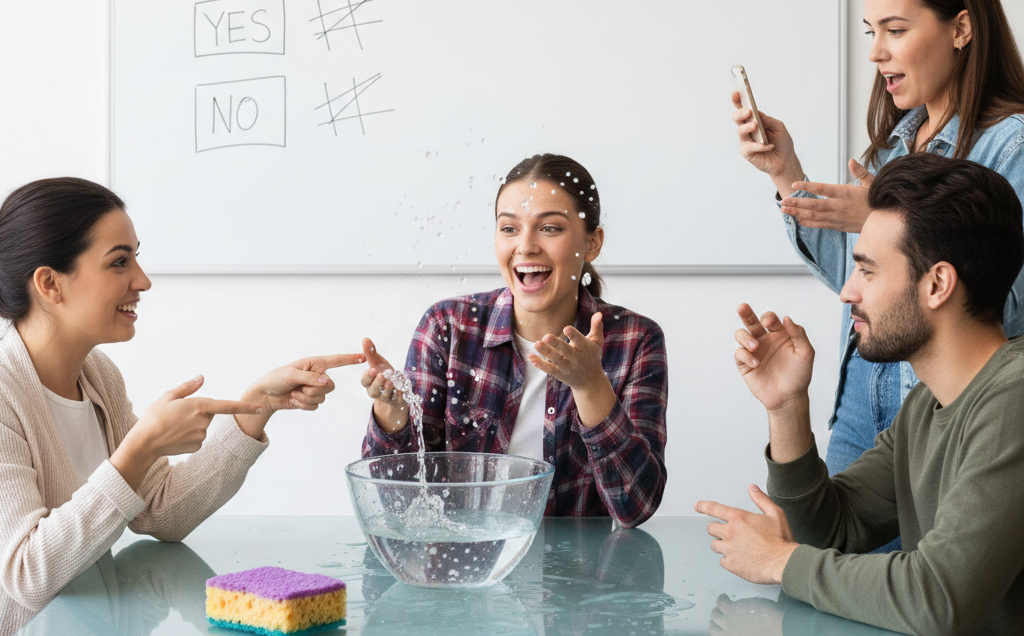
is water wet
The Great Debate: Is Water Wet?
Have you ever sat with your friends and asked a question that started a huge argument? One of the most famous questions people ask today is: is water wet? It sounds like a very simple question at first. You touch water, and your hand feels different. But when you really start to think about it, the answer becomes quite tricky. This debate has taken over the internet and classrooms all across the USA. Everyone has a strong opinion on whether the liquid itself can actually be described as being wet or not.
The reason people love asking is water wet? is because it makes you look at the world differently. We use water every single day to drink, wash, and swim. We know what it feels like, but describing it with science is a whole new challenge. This article will dive deep into the mystery to give you the best information. We will look at facts, funny stories, and what experts say about this liquid. By the end, you will have all the tools you need to win your next friendly debate.
Understanding the Meaning: Is Water Wet or Dry?
To find the truth, we first have to ask: is water wet or dry? Most people would laugh and say it definitely isn’t dry! But in the world of science, “wetness” is often defined as a feeling we get when a liquid touches a solid surface. For example, if you spill water on your favorite shirt, the shirt becomes wet. The water is the thing making the shirt wet. But can the water make itself wet? This is where the big confusion starts for most people who are trying to solve the puzzle.
If we say something is wet, we usually mean it is covered in a liquid. Since water is already a liquid, some people think it cannot be “covered” by itself. On the other hand, many believe that because water molecules stick together, they are constantly “wetting” each other. This means the debate over whether is water wet depends mostly on how you define the word “wet.” It is a fun way to practice using your brain to solve complex problems. Whether you think it is wet or not, it sure is refreshing!
Why Is Water Wet? Looking at the Science
If you want to know why is water wet, you have to look at how molecules behave. Water is made of tiny parts that love to hang onto each other. This is called cohesion. Water also loves to stick to other things, which is called adhesion. When you put your hand in a bowl of water, those molecules grab onto your skin. This interaction is what creates the sensation we call wetness. Without these sticky forces, water would just slide off us like tiny hard beads without leaving a trace.
The scientific reason behind the feeling is all about energy and surface tension. Water has a very high surface tension, which means it forms a strong “skin” on the top. When this skin breaks and touches a solid, it spreads out. This spreading action is what scientists study when they try to answer is water wet? in a lab. It is amazing how much power is hidden inside a single drop. Even though it feels simple to us, the physics happening in every splash is actually quite complicated and beautiful.
Is Water Wet Yes or No? The Simple Answer
Most people just want a straight answer: is water wet yes or no? If you ask a group of high school students, half will shout “Yes!” and the other half will yell “No!” The “Yes” group argues that if you touch water, you feel wet, so the water must be wet. They believe that since water is made of many molecules touching, every part of it is wet. It is a very logical way to look at the world around us. After all, your senses usually don’t lie to you.
However, the “No” group has a very strong point too. They say that “wet” is only a state of a solid object that has liquid on it. Since water is not a solid, it cannot be wet. They might say that water is “the essence of wetness,” but it isn’t wet itself. So, the answer to is water wet. really depends on who you are talking to at the moment. There isn’t one single law that everyone agrees on yet. This is why the question remains one of the most popular searches on the internet.
Is Water Wet Scientifically? The Expert View
When we ask is water wet scientifically, we get a very detailed explanation from chemists. Scientists usually define wetness as the ability of a liquid to maintain contact with a solid surface. This is caused by the balance between cohesive and adhesive forces. If the adhesive forces are strong, the liquid wets the surface. If they are weak, the liquid beads up and rolls away. For example, water wets a cotton towel very well, but it does not wet a waterproof raincoat or a waxed car.
Based on this strict definition, many scientists say that water itself is not wet. They argue that wetness is a description of how a liquid and a solid interact. A liquid cannot “wet” itself because there is no solid involved. So, the is water wet scientific answer is often a “No.” However, some experts disagree and say that the interaction between water molecules is enough to count. Science is all about asking questions and testing ideas, and this topic is a perfect example of that constant search for truth.
The Is Water Wet Joke: Having Some Fun
Because this topic is so famous, the is water wet joke has become a staple of internet humor. You can find thousands of funny videos and memes where people get into fake fights over the answer. Some jokes play on how frustrated people get when they can’t agree. For example, one joke says: “If water isn’t wet, then is fire burnt?” It is a silly way to show that our language isn’t always perfect. These jokes make the science of liquids much more relatable and fun for kids.
Using a is water wet ? joke is a great way to break the ice at a party or in a classroom. It gets people laughing and thinking at the same time. The debate has become a “meme” because it is so harmless yet so debated. It doesn’t matter who wins the argument because everyone ends up learning something new. Humor is a powerful tool for education. When we laugh about a scientific question, we are much more likely to remember the real facts behind the funny punchline.
Is Water Wet? A Comparison of Perspectives
| Perspective | Belief | Main Argument |
| Common Sense | Yes | Water feels wet when we touch it, so it must be wet. |
| Linguistic | No | “Wet” is an adjective for solids; liquids are the “wetting agent.” |
| Molecular Physics | Both | Molecules wet each other (Yes), but only on solids (No). |
| Internet Culture | Meme | It’s a fun argument to have with friends online. |
| Young Students | Yes | Everything in a pool is wet, including the water. |
Is Water Wet Scientific Answer: The Technical Details
If you are writing a paper or a report, you need the is water wet scientific answer to be very precise. In physics, we talk about the “contact angle.” This is the angle where a liquid interface meets a solid surface. If the angle is less than 90 degrees, the liquid is said to “wet” the surface. If the angle is higher, the surface is considered “hydrophobic” or water-fearing. This technical measurement is how engineers decide what materials to use for umbrellas, ships, and even medical tools that touch blood.
This means that wetness is a “property of a system,” not just a property of the water alone. To solve the is water wet scientifically mystery, you have to look at the whole picture. You need the water, the surface, and the air around them. Most textbooks lean toward the idea that water is the thing that performs the action of wetting. It is like saying a person who gives a gift is a “giver,” but they aren’t the “gift” themselves. This distinction is very important in higher-level chemistry and physics classes.
Why People Keep Asking: Is Water Wet?
It is amazing that after all these years, people still search for is water wet? every single day. The reason it stays popular is because it challenges our basic understanding of words. Language is how we share ideas, but sometimes words can be slippery. When we ask this question, we are really exploring how we define the world. It teaches us that even simple things like a glass of water can have layers of complexity. It encourages curiosity, which is the most important part of learning.
The debate over is water wet. is also a great way to practice civil disagreement. In a world where people argue about many things, this is a safe and fun topic. You can disagree with your best friend about water and still be friends afterward. It is a “brain teaser” that doesn’t have a wrong answer if you can explain your logic. As long as people are curious about the world, they will keep asking these types of questions. It keeps our minds active and our conversations interesting and lively.
How to Explain “Is Water Wet” to a Child
If a 5-year-old asks you is water wet, how do you explain it? You can tell them to think about a sponge. When the sponge is dry, it is light and scratchy. When you put it in water, it gets heavy and soft. The sponge is now “wet.” Then, ask them if the water in the sink is wet. They will likely say yes! You can then explain that water is the “magic juice” that makes other things wet. It is a simple way to help them understand the difference between a liquid and a solid.
Using toys or kitchen items is a great way to show why is water wet in real life. You can show how water sticks to a plastic toy but soaks into a paper towel. This introduces the idea of different surfaces without using big, scary words. Kids love to learn through play and observation. By turning the debate into a mini-science experiment, you are helping them become little scientists. They will feel proud that they understand a question that even grown-ups argue about all the time on the internet.
Frequently Asked Questions (FAQs)
1. Is water wet yes or no?
There is no single “correct” answer that everyone agrees on. If you define wet as “covered in liquid,” then water is wet because its molecules cover each other. If you define wet as “a liquid sticking to a solid,” then water is not wet because it is not a solid.
2. Is water wet scientifically?
Scientifically, wetness is the ability of a liquid to adhere to a solid surface. Most scientists argue that water is the “wetting agent,” meaning it makes other things wet but is not wet itself. It is a matter of technical definitions in chemistry.
3. Is water wet or dry?
Water is definitely not dry! Dryness is the absence of liquid. However, being “not dry” doesn’t automatically mean something is “wet” in the scientific sense. Water is a liquid, which is its own state of matter, separate from the descriptions of wet or dry.
4. Why is water wet?
Water feels wet because of its cohesive and adhesive properties. The molecules stick to each other and to your skin. This interaction creates the physical sensation that our brains interpret as “wetness” when we touch it.
5. What is the is water wet joke?
The most common joke is to ask similar confusing questions, like “Is fire on fire?” or “Is the sun hot?” These jokes highlight how silly it can be to argue over definitions of things that are obvious to our senses but hard to describe with words.
6. Can water make other liquids wet?
Usually, the term “wet” is only used when a liquid touches a solid. When two liquids mix, like water and juice, we just call it a mixture. We don’t usually say the water is making the juice wet. It’s all about how the substances interact at a molecular level.
Conclusion: The Final Verdict on Water
In the end, the question is water wet is a beautiful puzzle that connects science, language, and fun. Whether you side with the scientists who say “No” or the everyday people who say “Yes,” you are part of a global conversation. The important thing is not finding a single answer, but enjoying the process of thinking and debating. Water is a fascinating substance that sustains all life on Earth. Its ability to “wet” surfaces is what allows plants to grow and humans to stay clean and healthy.
Next time someone asks you is water wet?, you can give them a very detailed and smart answer. You can explain the difference between cohesion and adhesion. You can tell them about the contact angle and molecular forces. Or, you can just share a funny joke and enjoy the laugh. Whatever you choose, you now have the expertise to handle this viral debate with ease. Keep asking questions, keep learning, and always stay curious about the amazing world around you!
| Read More Informative Blogs Like This. Tap Here 👉 Maldives Holidays 2025 Guide — Luxury |
About the Author